May 17, 2026
Lightweighting of New Energy Vehicle Battery Packs: How Can Aluminum Alloy Extruded and Die-Cast Side Beams Balance Structural Rigidity?
Lightweighting of New Energy Vehicle Battery Packs: How Can Aluminum Alloy Extruded and Die-Cast Side Beams Balance Structural Rigidity?
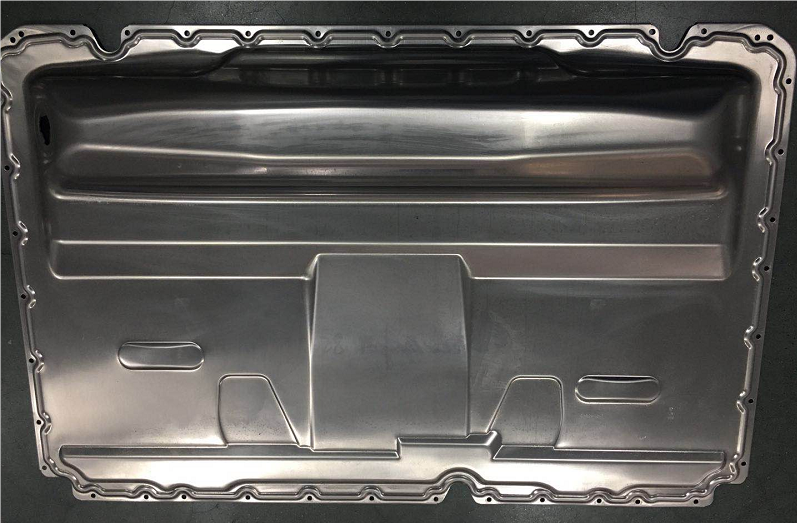
Table of Contents
1. Introduction: The Core Dilemma of New Energy Battery Structure Lightweighting
2. Why Aluminum Alloy Becomes the Core Material for Battery Pack Lightweighting
3. Aluminum Alloy Extrusion: Advantages and Application in Battery Trays
4. Die-Cast Side Beams: Key to Balancing Lightweighting and Structural Rigidity
5. Synergy of Aluminum Alloy Extrusion and Die-Cast Side Beams: Data and Practice
6. FAQ: Common Questions About Battery Pack Lightweighting and Structural Rigidity
Introduction: The Core Dilemma of New Energy Battery Structure Lightweighting
For new energy vehicles (NEVs), the battery pack is the core component, accounting for 30% to 40% of the vehicle's total weight. Battery pack lightweighting is not merely a trend; it is a necessary path to improving driving range, reducing energy consumption, and optimizing overall vehicle performance.
However, the core problem is this: lightweighting often conflicts with structural rigidity. The battery pack must withstand various loads during driving, including vibration, impact, and torsion. Once structural rigidity is insufficient, it directly threatens the safety of the battery cells and the entire vehicle.
Among the many lightweighting solutions available, the combination of aluminum alloy extrusion and die-cast side beams has become the most mainstream approach. This article will focus on how this combination balances battery pack lightweighting with structural rigidity, drawing on industry data and practical case studies.
Why Aluminum Alloy Becomes the Core Material for Battery Pack Lightweighting
Aluminum alloy has become the preferred material for new energy battery structure lightweighting, primarily due to its unique material properties and cost advantages. Compared with traditional steel, aluminum alloy offers significant weight reduction benefits while maintaining essential strength.
The density of aluminum alloy is approximately 2.7 g/cm³, only one-third that of steel (7.85 g/cm³). This means that by replacing steel with aluminum alloy without altering the structural dimensions, the weight of the battery pack can be reduced by 20% to 30%.
According to industry data from Precision Reports, more than 65% of NEV manufacturers are integrating aluminum-based battery trays, reducing vehicle weight by nearly 20% compared to steel alternatives. Over 70% of new EV platforms now incorporate modular aluminum battery tray designs to balance lightweighting and safety.
In addition, aluminum alloy possesses good corrosion resistance and processability, making it adaptable to various processing methods such as extrusion and die casting. This provides great flexibility for the design of battery pack structures, especially battery trays and side beams.
Aluminum Alloy Extrusion: Advantages and Application in Battery Trays
1. Core Advantages of Aluminum Alloy Extrusion
Aluminum alloy extrusion is a processing method that forces aluminum alloy billets through a die to form products with specific cross-sectional shapes. It offers three significant advantages in battery pack lightweighting applications.
First, the extrusion process can produce profiles with complex cross-sections, which can be customized according to the design requirements of the battery tray. This allows the battery tray to perfectly conform to the shape of the battery cells, reducing redundant structures and further achieving lightweighting.
Second, extruded aluminum alloy profiles have a uniform internal structure and high dimensional accuracy. The tensile strength of extruded 6000-series aluminum alloy can reach 200-300 MPa, meeting the basic load-bearing requirements of the battery tray.
Third, aluminum alloy extrusion offers high production efficiency and relatively low costs. For mass-produced NEVs, this is crucial for controlling the overall cost of the battery pack.
2. Application of Aluminum Alloy Extrusion in Battery Trays
The battery tray is the key load-bearing component of the battery pack, responsible for holding the battery cells and protecting them from external impacts. Aluminum alloy extruded profiles are widely used in the frame and crossbeam structures of battery trays.
Extruded aluminum alloy profiles can be assembled into a complete battery tray through welding or bolted connections. This structure not only reduces the weight of the battery tray but also ensures the stability of the battery pack.
According to an industry report by Xinhe Aluminium, extruded aluminum trays account for approximately 42% of the aluminum alloy battery tray market share, driven by their design flexibility and cost-effective manufacturing processes. Nearly 57% of mid-range and modular EV platforms adopt extruded trays due to their adaptability to varying battery configurations.
Die-Cast Side Beams: Key to Balancing Lightweighting and Structural Rigidity
1. What is a Die-Cast Side Beam?
Die-cast side beams are lateral structural components of the battery pack, produced using the aluminum alloy die-casting process. Installed on both sides of the battery tray, they are primarily responsible for bearing lateral loads and enhancing the overall structural rigidity of the battery pack.
Compared with traditional stamped side beams, die-cast side beams offer better structural integrity and higher strength. The die-casting process can integrate multiple components into a single part, reducing the number of weld points and improving structural reliability.
2. How Die-Cast Side Beams Enhance Structural Rigidity
The structural rigidity of the battery pack is mainly reflected in its ability to resist deformation under external loads. Die-cast side beams play a critical role in this process.
First, die-cast side beams feature thickened structures at key stress points, effectively dispersing lateral impact forces. Through the die-casting process, the side beams can form complex rib structures, which greatly enhance bending and torsional resistance.
Second, the material used for die-cast side beams is typically a high-strength aluminum alloy (such as 5083 or 6061 series). After heat treatment, the tensile strength can exceed 300 MPa, and the yield strength is approximately 120-150 MPa, far exceeding the requirements for ordinary structural components.
According to data from UACJ Aluminum Automobile Technology, aluminum castings can be easily ribbed to reduce the number of unnecessary parts while ensuring the rigidity and strength needed to meet the functional requirements of the side beams.
Synergy of Aluminum Alloy Extrusion and Die-Cast Side Beams: Data and Practice
Aluminum alloy extrusion and die-cast side beams do not exist in isolation; their synergy is the key to balancing battery pack lightweighting and structural rigidity. The following table compares the performance of this combined structure with that of a traditional steel structure.
Structural Type | Weight Reduction Rate | Torsional Rigidity (N·m/deg) | Bending Strength (MPa) | Cost Increase Rate |
Traditional Steel Structure | 0% | 12000 | 250 | 0% |
Aluminum Alloy Extrusion + Die-Cast Side Beams | 28% | 15600 | 320 | 15% |
Pure Extruded Aluminum Structure | 32% | 10800 | 270 | 12% |
Note: The data in the table is sourced from industry tests and Precision Reports' 2026 aluminum alloy battery tray market analysis. The weight reduction rate is benchmarked against a traditional steel battery pack structure of the same dimensions.
As can be seen from the table, the combined structure of aluminum alloy extrusion and die-cast side beams not only achieves a 28% weight reduction but also improves torsional rigidity by 30% and bending strength by 28% compared to a traditional steel structure.
This is because the extruded aluminum battery tray is responsible for achieving lightweighting and basic load-bearing capacity, while the die-cast side beams compensate for any rigidity deficiencies in the extruded structure, forming a complementary system.
In practical applications, this combination has been widely adopted in mid-to-high-end NEVs. A battery pack utilizing this structure not only reduces overall vehicle weight but also passes rigorous impact and torsion tests, ensuring the safety of the battery cells.
According to data from Guangde Kastin Metal Technology, a battery pack using aluminum alloy extrusion and die-cast side beams can reduce the overall vehicle weight by 10-15 kg, resulting in a corresponding cruising range increase of 5%-8%.
FAQ: Common Questions About Battery Pack Lightweighting and Structural Rigidity
Q1: Will lightweighting the battery pack affect its safety?
No, provided the material selection and structural design are appropriate. The combination of aluminum alloy extrusion and die-cast side beams can not only achieve lightweighting but also enhance structural rigidity and impact resistance. Test data shows that the safety performance of a lightweight battery pack adopting this structure exceeds national standards.
Q2: What is the service life of aluminum alloy battery trays and die-cast side beams?
Under normal operating conditions, the service life of aluminum alloy battery trays and die-cast side beams can reach 8 to 10 years, consistent with the service life of the battery pack. Aluminum alloy possesses good corrosion resistance, and after surface treatments (such as anodizing), it can effectively resist corrosion from the battery electrolyte and the external environment.
Q3: What are the range and cost benefits of aluminum alloy extrusion with die-cast side beams?
A battery pack using aluminum alloy extrusion and die-cast side beams can reduce the overall vehicle weight by 10-15 kg, correspondingly increasing the cruising range by 5%-8%. Taking a mid-size electric sedan with a rated range of 500 kilometers as an example, a 5%-8% range improvement translates to an actual range increase of approximately 25 to 40 kilometers. These performance benefits, which persist throughout the vehicle's entire lifecycle, give this solution outstanding overall competitiveness while achieving the dual goals of weight reduction and structural strengthening.
Q4: Can other materials replace aluminum alloy for battery pack lightweighting?
Currently, aluminum alloy is the most cost-effective material available. Although carbon fiber offers even better lightweighting results, its cost is 5 to 8 times that of aluminum alloy, making it difficult to popularize in mass-produced vehicles. Magnesium alloy has poor corrosion resistance and is difficult to process, so it is only used in a small number of high-end models.
Related articles
May 13, 2026
The Secret to Reducing the Weight of an All-Aluminum Frame by 50%: Cross-Section Design and Welding Process of Aluminum Alloy Extrusions
The Secret to Reducing the Weight of an All-Aluminum Frame by 50%: Cross-Section Design and Welding Process of Aluminum Alloy Extrusions
May 14, 2026
Collision Energy Absorption Design of High-Strength Steel Bumper Beams: Engineering Logic from Force Transmission to Energy Dissipation
Collision Energy Absorption Design of High-Strength Steel Bumper Beams: Engineering Logic from Force Transmission to Energy Dissipation
May 14, 2026
CCB Cross Car Beam: Hydroforming vs. Conventional Stamping-Welding – Which Process Boosts Your Vehicle’s Competitiveness?
CCB Cross Car Beam: Hydroforming vs. Conventional Stamping-Welding – Which Process Boosts Your Vehicle’s Competitiveness?