May 14, 2026
CCB Cross Car Beam: Hydroforming vs. Conventional Stamping-Welding – Which Process Boosts Your Vehicle’s Competitiveness?
CCB Cross Car Beam: Hydroforming vs. Conventional Stamping-Welding – Which Process Boosts Your Vehicle’s Competitiveness?
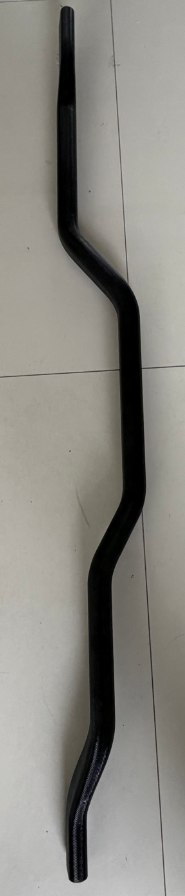
Table of Contents
1. Introduction: The Core Role of the CCB in Instrument Panel Support
2. What are a CCB, Hydroforming, and the Conventional Stamping-Welding Process?
3. Process Comparison: Hydroformed One-Piece Tube Beam vs. Conventional Stamping-Welded Beam
4. Performance Data Comparison: Chart Analysis
5. Key Factors in Selecting the Right Forming Process
6. FAQ: Common Questions About CCB Beam Forming Processes
1. Introduction: The Core Role of the CCB in Instrument Panel Support
In automotive manufacturing, the Cross Car Beam (CCB) is not just a structural part; it serves as the core skeleton for the instrument panel, supporting the weight of the dashboard, airbags, steering column, and HVAC unit.
Its forming process directly impacts the component's strength, precision, and lightweight performance, which in turn affects the vehicle's safety, handling, and NVH (Noise, Vibration, and Harshness) characteristics.
The mainstream CCB manufacturing technology is currently evolving from conventional stamping-welding to hydroformed one-piece tube beams. These two technical routes have different strengths and are suitable for different scenarios.
Many automakers face a dilemma during this technological upgrade. This article will compare the two processes from a professional perspective, combining industry data and structural principles to help you determine which process is more conducive to enhancing your vehicle’s overall competitiveness.
2. What are a CCB, Hydroforming, and the Conventional Stamping-Welding Process?
2.1 CCB Cross Car Beam
The CCB Cross Car Beam is a critical load-bearing component that horizontally spans the front of the vehicle's interior.
It connects the left and right A-pillars, providing stable support for various instrument panel components, while also enhancing the overall rigidity of the vehicle body, playing a particularly important role in side-impact scenarios.
With the industry trend towards vehicle lightweighting, the performance requirements for the CCB are increasing, and the choice of its forming process is directly linked to the realization of overall vehicle performance.
2.2 Hydroforming
Hydroforming is an advanced forming process that uses high-pressure hydraulic oil to press a metal material into the desired shape within a mold. It is widely used in automotive component manufacturing and is particularly suited for complex tubular parts.
In CCB production, hydroforming uses a hollow metal tube as a blank. High-pressure fluid is injected into the tube, forcing the blank to expand and perfectly conform to the mold’s contours.
This process can produce complex-shaped, one-piece components with uniform wall thickness. It fundamentally eliminates the need for the separate stamping and subsequent welding steps associated with traditional methods, while also enhancing the material's mechanical properties.
2.3 Conventional Stamping-Welding Process
The conventional stamping-welding process is a mature technology still used in many current vehicle models. This process involves stamping metal sheets into multiple halves or structural components, which are then joined together, typically by resistance or arc welding, to form a complete beam assembly.
While this process is relatively simple and technologically mature, the component is a patchwork of multiple materials with weld seams, creating inherent limitations in structural integrity, weight, and precision control.
3. Process Comparison: Hydroformed One-Piece Tube Beam vs. Conventional Stamping-Welded Beam
3.1 Forming Principle and Structural Integrity
Hydroforming uses evenly distributed fluid force to form a hollow tube beam with a complex cross-section in one step. This gives the CCB a uniform wall thickness without localized stress concentration, creating a true one-piece structure.
This process avoids the heat-affected zones, risk of weld spot cracking, and extra weight associated with welding, thereby fundamentally enhancing structural integrity and durability.
In contrast, the conventional stamping-welding process results in an assembly of multiple stamped parts joined by dozens or even hundreds of weld spots. These weld seams are potential weak points that can cause stress concentration. For the same weight, the overall modal stiffness of such an assembly is lower than that of a hydroformed tube beam.
3.2 Material Adaptability
Hydroforming exhibits exceptional material adaptability and can process high-strength steel, aluminum alloys, and even magnesium alloys—materials commonly used for lightweight CCBs.
The uniform force transmitted by the hydraulic fluid prevents the material from cracking or wrinkling during forming. This makes it particularly suitable for high-strength materials that are difficult to form with conventional stamping, enabling extreme lightweighting.
The conventional stamping-welding process is better suited for mild steel or low-strength aluminum alloys. When processing high-strength materials, stamping springback is severe, and the welding of high-strength steel is complex, costly, and difficult to quality-control, significantly limiting the application of high-strength, lightweight materials.
3.3 Precision and Surface Quality
Hydroformed CCBs achieve high dimensional accuracy, with tolerances stably controlled within ±0.3 mm, meeting the stringent modular assembly requirements of modern vehicles. The component's surface is smooth, free of weld lines and scratches, which reduces the need for subsequent calibration and polishing, and also improves the overall aesthetics of the supporting structure.
The overall precision of the conventional stamping-welding process is relatively low, with tolerances typically in the range of ±0.5-1.5 mm. This is a common and hard-to-eradicate problem caused by the springback of stamped parts and thermal deformation during welding, often requiring additional correction steps. Moreover, weld seams and their surrounding areas require grinding, impacting the final appearance.
4. Performance Data Comparison: Chart Analysis
To more intuitively demonstrate the differences between the two processes, we have collected test data from authoritative industry bodies and real-world production cases. The table below details the differences in performance, cost-efficiency, and overall productivity between the two processes for CCB production.
Metric | Hydroforming (One-Piece Tube Beam) | Conventional Stamping-Welding (Assembly) | Comprehensive Value Analysis |
Dimensional Accuracy (mm) | ±0.3 | ±0.5-1.5 | High precision provides a more stable mounting base for sensitive equipment like large in-car screens and HUDs. |
Lightweighting Effect (Weight Reduction) | 15-25% | Baseline | Achieving 15-25% weight reduction directly contributes to increased EV range or reduced emissions. |
Component Integration | High; can integrate brackets and features | Low; brackets must be welded on separately | Significantly reduces part count and assembly steps, streamlining the final assembly process. |
Fatigue Durability | Superior; weld-free, one-piece structure | Moderate; risk of fatigue at weld seams | Fatigue life is over 30% longer than stamping-welded parts, improving full-lifecycle reliability. |
Production Efficiency (pieces/hour) | 20-25 | 15-20 (including welding) | Integrated production with smoother process flow results in higher overall output efficiency. |
Post-Processing Requirements | Very Low (no grinding or welding needed) | High (welding, springback correction, grinding required) | Saves approximately 40% on subsequent processing steps, significantly shortening the manufacturing cycle. |
Note: Data is based on an identical CCB design (1200mm length) and benchmarked against performance indicators for mainstream vehicle models.
As the data shows, hydroforming creates outstanding structural advantages in lightweighting, precision, durability, and integration. While its initial investment in tooling is higher, the resulting weight reduction—which translates into improved range or lower emissions—the reduced part count, and the shorter manufacturing cycle create a total value that far exceeds the initial outlay in high-volume production.
The choice of process depends on a vehicle program’s pursuit of high performance, high integration, and longer driving range.
5. Key Factors in Selecting the Right Forming Process
5.1 Vehicle Positioning and Performance Requirements
For mid-to-high-end passenger cars and new energy vehicles (NEVs), which have higher requirements for safety, precision, and lightweighting, hydroforming is the strategic choice to achieve these core targets.
A CCB made with this process can achieve a 15-25% weight reduction, directly translating into a comparable contribution to battery range or a reduction in emissions. Its one-piece structure provides higher stiffness and better modal performance, significantly improving crash safety and NVH qualities. These enhancements in core competitiveness align perfectly with the market positioning of such vehicles.
For entry-level economy cars and some commercial vehicles, the core demand is to meet regulations and basic functions at a constrained cost. The conventional stamping-welding process, with its mature supply chain, can meet these basic instrument panel support needs.
5.2 Production Scale and Total Cost
In high-volume production, the manufacturing cost reductions from hydroforming's high efficiency and integration effectively amortize the upfront investment. For vehicle programs with annual production planning of 100,000 units or more, hydroforming is the more economical solution, delivering a generational leap in performance for a marginal or neutral impact on per-piece cost.
For low-volume production or development prototypes (typically less than 30,000 units annually), the high amortization of hydroforming's unit cost is a barrier. In this case, the low initial investment and design flexibility of the stamping-welding process are advantageous, reducing early investment risk.
5.3 Material Selection and Vehicle Strategy
If a CCB is designed to use advanced high-strength steel, aluminum alloy, or magnesium alloy for ultimate lightweighting and strength, hydroforming is often the only viable industrialized solution. It can handle materials that are difficult to process with traditional methods, serving as the foundational technology to achieve a vehicle’s top-level lightweighting and safety goals.
If the design uses mild steel, both processes are feasible, but hydroforming still offers significant integration and weight advantages. The choice then depends on whether the vehicle project values the gains in range or emissions reduction that come from weight savings.
6. FAQ: Common Questions About CCB Beam Forming Processes
Q1: Can hydroforming be used for all types of CCB cross car beams?
A1: Its application range is very wide. Hydroforming is most advantageous for CCBs that require high performance, lightweighting, and integration, especially those with complex curved surfaces and variable cross-sections. For extremely simple, straight tubes, the performance advantages are not fully realized, and traditional methods may have a cost edge. Also, hydroforming has limitations when processing very thick-walled tubes (over 5mm).
Q2: Can the precision issues of the conventional stamping-welding process be completely solved?
A2: They can be mitigated but not eradicated. Springback can be compensated for during die design, and precision can be improved with better welding fixtures or post-weld heat treatment. However, this adds significant process complexity and cost, and the overall precision still cannot match that of a one-piece hydroformed component. This is a critical weakness for beams that need to mount high-precision electronic modules.
Q3: Which forming process yields a CCB cross car beam with a longer service life?
A3: The hydroformed, one-piece tube beam has a significantly longer service life. Its weld-free, one-piece structure fundamentally eliminates the risk of fatigue cracking at weld spots. The uniform wall thickness and stress distribution greatly reduce the probability of long-term fatigue failure. Industry tests show its fatigue life is over 30% longer than that of conventional stamping-welded structures.
Q4: Does hydroforming increase the overall vehicle manufacturing cost?
A4: This depends on production scale and how cost is evaluated. In high-volume production, hydroforming is competitively priced per part because its one-piece integration reduces the number of components, welding stations, grinding and calibration personnel, and associated logistics costs. More importantly, the resulting 15-25% weight reduction saves valuable battery power and extends range in electric vehicles, or reduces fuel consumption in internal combustion engine vehicles. This performance premium far outweighs a simple part-cost comparison, making it a high-value system solution.
Related articles
May 13, 2026
The Secret to Reducing the Weight of an All-Aluminum Frame by 50%: Cross-Section Design and Welding Process of Aluminum Alloy Extrusions
The Secret to Reducing the Weight of an All-Aluminum Frame by 50%: Cross-Section Design and Welding Process of Aluminum Alloy Extrusions
May 17, 2026
Lightweighting of New Energy Vehicle Battery Packs: How Can Aluminum Alloy Extruded and Die-Cast Side Beams Balance Structural Rigidity?
Lightweighting of New Energy Vehicle Battery Packs: How Can Aluminum Alloy Extruded and Die-Cast Side Beams Balance Structural Rigidity?
May 14, 2026
Collision Energy Absorption Design of High-Strength Steel Bumper Beams: Engineering Logic from Force Transmission to Energy Dissipation
Collision Energy Absorption Design of High-Strength Steel Bumper Beams: Engineering Logic from Force Transmission to Energy Dissipation