September 18, 2026
The Future of Battery Side Beams: Lightweight, Multi-Functional Extrusions
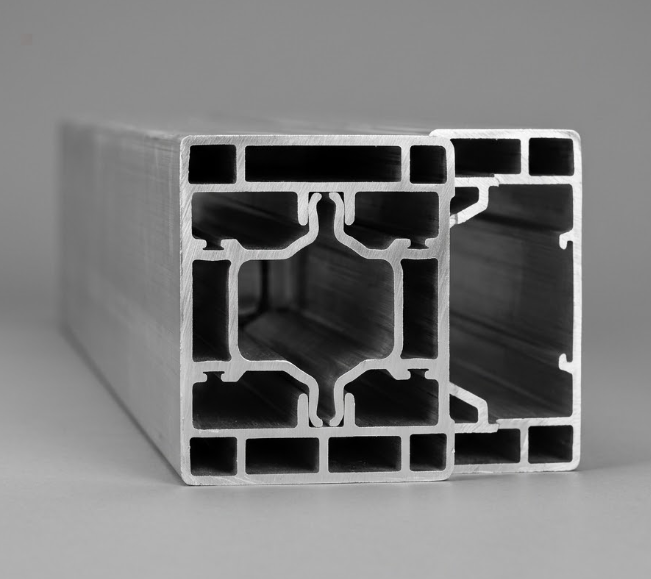
Table of Contents
Introduction: The Evolution of Battery Protection
The Shift to Aluminum Extrusions: Lightweight and Strong
Beyond Structural Support: Integrating Multi-Functionality
Material and Process Innovations
Market Trends and Industry Outlook
Frequently Asked Questions (FAQ)
1. Introduction: The Evolution of Battery Protection
The battery pack is the single most expensive and critical component of an electric vehicle. Protecting it from impact is not just about preventing damage—it's about ensuring passenger safety and preventing thermal runaway.
In modern EV architectures, the battery pack sits under the cabin floor and is often integrated into the vehicle's structural load path. This "cell-to-body" or "cell-to-pack" approach means the battery enclosure itself must contribute to crashworthiness. The side beams that run along the edges of the battery pack are the first line of defense in side-impact collisions, where intrusion into the battery compartment can have catastrophic consequences.
The future of these components lies in a simple proposition: make them lighter, make them stronger, and make them do more.
2. The Shift to Aluminum Extrusions: Lightweight and Strong
The most significant trend in battery side beam design is the move from steel stampings and welded assemblies to aluminum extrusions.
Why Aluminum Extrusion?
Aluminum extrusions offer a combination of properties that make them ideal for this application:
Weight reduction: Aluminum is approximately one-third the density of steel. A side impact load of about 600 kN can be supported by an extruded aluminum member with over 20% weight savings compared to a stamped or roll-formed steel component of equivalent strength .
Design flexibility: The extrusion process allows for complex cross-sections with multiple internal chambers, ribs, and integrated features that cannot be achieved with stamping . A side beam can have up to a dozen internal cavities, optimizing the balance between strength, stiffness, and weight .
Crash energy absorption: Multi-chamber aluminum profiles absorb significant energy per kilogram during deformation, making them well-suited for side-impact protection .
Real-World Application
A typical production example illustrates the scale and efficiency of this approach. One manufacturer produces a new energy vehicle battery side beam with 12 internal chambers. The extruded profile is designed to withstand a 10-ton load without deformation, ensuring battery protection in severe impacts. Production runs at approximately 10 meters of side beam per minute on a single extrusion line .
3. Beyond Structural Support: Integrating Multi-Functionality
The second major trend is the integration of multiple functions into a single extruded component. The side beam is no longer just a structural member—it is becoming a multi-functional platform that serves several purposes simultaneously.
Integrated Venting for Thermal Runaway
One of the most significant innovations is the integration of venting channels within the extrusion. In a patented design, the extruded side beam includes an internal venting chamber that provides a controlled pathway for exhaust gases during thermal runaway .
The system works through a series of integrated features:
Cell vents: Openings through the inner wall of the beam connect individual battery cells to the venting chamber.
Pack vents: Openings through the lower side of the beam allow exhaust to exit to the exterior of the vehicle.
Internal baffles: The venting chamber is designed with baffles to muffle, diffuse, and cool the hot gases, dropping particles before they exit the pack.
This design channels the high-temperature exhaust away from other cells, reducing the risk of cascading thermal runaway and protecting high-voltage busbars from arcing .
Integrated Mounting and Assembly Features
Extrusions can be designed with integrated mounting features, such as:
Threaded holes: Machined after extrusion to allow lid and bottom plate attachment .
Flanges: For interfacing with adjacent components.
Grooves: For routing coolant lines or busbars .
By integrating these features directly into the extrusion, manufacturers reduce part count, assembly complexity, and the need for additional brackets or fasteners.
4. Material and Process Innovations
Advanced Alloys and Processing
The industry is developing alloys and processes optimized specifically for battery protection applications. Key challenges include:
Balancing strength and ductility: High-strength alloys are desired for weight reduction, but not at the cost of ductility—the profile must deform rather than fragment in a crash .
Complex profile extrusion: Large, multi-chamber profiles in high-strength alloys are expensive to extrude. Research is focused on improving die design through simulation to increase productivity and reduce cost .
Mechanical calibration: Post-extrusion machining of complex profiles is costly. Manufacturers are exploring mechanical calibration processes to achieve the required geometry without extensive machining .
Extrudable Silicone Insulation
A complementary innovation is the development of extrudable silicone rubber for insulating high-voltage busbars within the battery pack .
Wacker's ELASTOSIL R 531/60 is a silicone rubber that can be extruded directly onto aluminum or copper busbars. Key properties include:
Ceramification in fire: In the event of a fire, the silicone forms a ceramic shell that remains electrically insulating at temperatures between 800 and 1,000°C, preventing short circuits and protecting passengers and rescue workers .
Flexibility at low temperatures: The material remains flexible down to -40°C, protecting against vibration and impact without cracking .
Continuous operating temperature: Effective up to 205°C .
This extrudable insulation complements the trend toward extruded structural components, enabling a more integrated and efficient battery assembly process.
5. Market Trends and Industry Outlook
The market for battery protection systems, including side beams, is substantial and growing.
Market Scale
The battery casing for a single EV contains approximately 100 kg of aluminum, a large share of which is extruded profiles .
The European market for aluminum in battery trays and protection systems was estimated to exceed 240,000 tons in 2025 .
Prduction Ecosystem
Manufacturers are building dedicated production capacity for these components. Production facilities equipped with large extrusion presses (up to 3,000 tons) and advanced CNC machining centers are being established to serve the EV market . Full-service providers offer design, extrusion, fabrication (including welding, bending, and assembly), and surface finishing under one roof, reducing lead times and supply chain complexity .
Future Directions
The industry continues to innovate around:
Modular frame designs: Using extruded side and cross members to create battery pack frames of any length or width, improving flexibility and reducing development costs .
Cost reduction: Addressing the cost premium of aluminum compared to steel through improved extrusion productivity and process optimization .
Increased integration: Extending the concept of multi-functional extrusions to include cooling channels, mounting points, and even integrated crash structures.
6. Frequently Asked Questions (FAQ)
Q: What is a battery side beam?
A: A battery side beam is a structural component that runs along the edge of an electric vehicle's battery pack. It provides structural support, protects the battery cells from side impacts, and in advanced designs, integrates venting channels for thermal runaway management.
Q: Why use aluminum extrusions instead of steel stampings?
A: Aluminum extrusions are significantly lighter (over 20% weight savings) while providing equivalent or better strength. They also allow for complex cross-sections with multiple internal chambers, enabling better energy absorption and integrated functionality like venting channels.
Q: How do integrated venting channels work?
A: In a multi-functional extrusion, internal chambers serve as venting pathways. During thermal runaway, hot gases flow from the battery cell through cell vents into the venting chamber, where baffles muffle and cool the exhaust before it exits through pack vents to the outside of the vehicle.
Q: What materials are used for battery side beams?
A: High-strength aluminum alloys, typically 6000 or 7000 series, are the primary materials. The specific alloy is chosen to balance strength, ductility, and extrudability.
Q: How much aluminum is used in EV battery enclosures?
A: A typical EV battery enclosure contains approximately 100 kg of aluminum, with a significant portion being extruded profiles for side beams, cross members, and frames.
Q: What are the main challenges in producing battery side beams?
A: Key challenges include extruding large, complex profiles with multiple chambers at high productivity, balancing strength with ductility for crashworthiness, and reducing the cost premium of aluminum compared to steel.