June 5, 2026
New Energy Vehicle Battery Box Structure Selection: Cost and Performance Game of High-Pressure Die Casting vs Extrusion Forming vs Stamping Welding
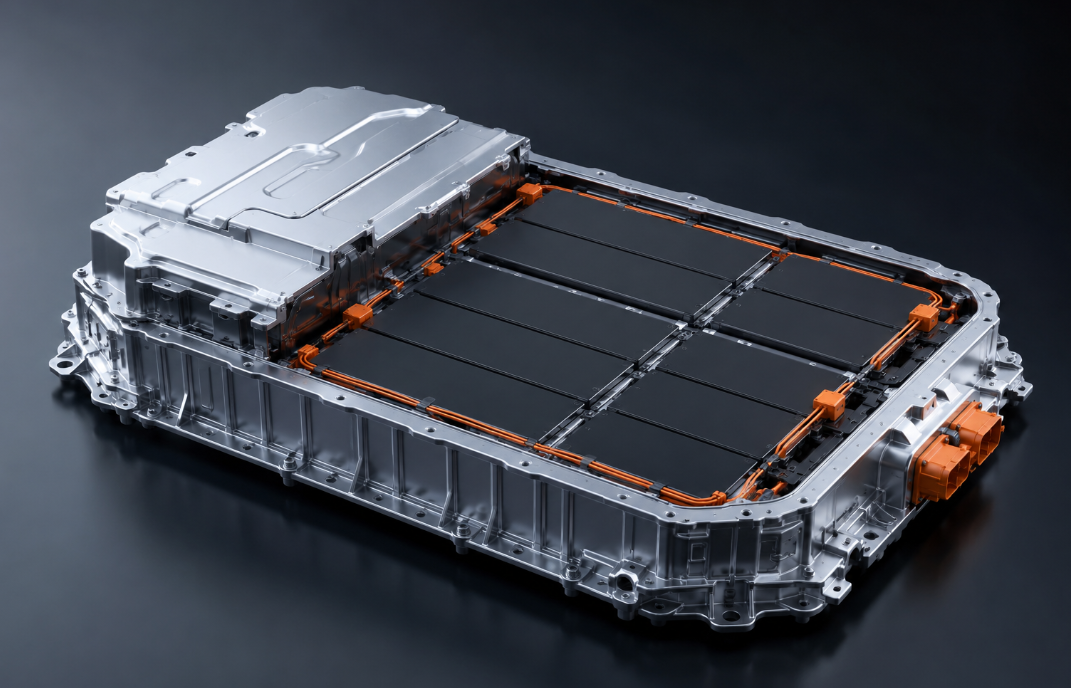
Table of Contents
1. Structural Manufacturing Trends of New Energy Vehicle Battery Components
2. Process Principles of Three Main Battery Box Structure Manufacturing Methods
3. Comprehensive Performance and Cost Data Comparison
4. Applicable Scenarios for High-Pressure Die Casting Battery Box Parts
5. Application Advantages of Extrusion Forming and Stamping Welding Processes
6. Key Selection Criteria for New Energy Vehicle Battery Box Structure Parts
7. Industry FAQ
1. Structural Manufacturing Trends of New Energy Vehicle Battery Components
New energy vehicle battery safety and lightweight always core demands for automobile manufacturers.
Battery box structure parts is the key protective component of vehicle battery pack. It bear impact load and seal the internal battery module.
Different manufacturing processes bring huge gaps in structural strength, weight and production cost.
High-pressure die casting, extrusion forming and stamping welding are three mainstream processes for new energy vehicle battery production.
Factories need balance performance and cost to choose the best process for mass production.
2. Process Principles of Three Main Battery Box Structure Manufacturing Methods
2.1 High-Pressure Die Casting Process
High-pressure die casting inject molten aluminum alloy into precision molds at high speed and pressure.
The process complete one-time forming of complex battery box structure parts.
It reduce assembly gaps effectively. The overall structural integrity is very good.
2.2 Extrusion Forming Process
Extrusion forming squeeze solid aluminum profiles through fixed die openings.
It produce long and regular section profiles for battery box frame and support parts.
The material density is uniform. The heat dissipation performance keep stable.
2.3 Stamping Welding Process
Stamping welding use steel or aluminum sheet stamping to form single parts.
Workers and equipment weld multiple stamped parts together to form complete battery box structure.
This process have low mold cost and strong structural adjustability.
3. Comprehensive Performance and Cost Data Comparison
All test data refer to SAE J2954 new energy vehicle structural component standard. Data collect from mainstream vehicle manufacturing factories.
Evaluation Index | High-Pressure Die Casting | Extrusion Forming | Stamping Welding |
Component Weight (Standard Box) | 8.2kg | 9.5kg | 12.3kg |
Structural Integrity Score | 9.6/10 | 8.5/10 | 7.2/10 |
Single Piece Production Cost | High | Medium | Low |
Heat Dissipation Efficiency | Excellent | Good | Average |
Batch Production Efficiency | High | Medium | Low |
High-pressure die casting take obvious advantage in lightweight and structural stability.
Stamping welding is more cost-effective for low-end and low-volume production.
Extrusion forming achieve balanced performance in heat dissipation and structural toughness.
4. Applicable Scenarios for High-Pressure Die Casting Battery Box Parts
High-pressure die casting is the mainstream process for high-end new energy vehicle battery box structure parts.
One-piece forming design eliminate welding gaps. It improve battery box sealing performance.
The lightweight effect effectively reduce vehicle energy consumption. It increase cruising range.
This process suit for medium and high-end models with high safety standard requirements.
5. Application Advantages of Extrusion Forming and Stamping Welding Processes
5.1 Extrusion Forming Advantages
Extrusion forming parts have uniform internal stress. It not easy to deform in long-term use.
The profile structure is convenient for later processing and modification. It fit customized battery box design.
It widely used in commercial new energy vehicle battery support structures.
5.2 Stamping Welding Advantages
Stamping welding need no expensive integral mold. The early investment cost is low.
The production cycle is short for small batch orders. It have high market flexibility.
Most entry-level new energy vehicles still use stamping welding battery box structure.
6. Key Selection Criteria for New Energy Vehicle Battery Box Structure Parts
Manufacturers first confirm vehicle positioning when choose battery box manufacturing process.
High-end passenger cars prioritize high-pressure die casting for safety and lightweight.
Commercial vehicles choose extrusion forming for stable structural toughness.
Cost-sensitive entry models adopt stamping welding to control production budget.
Balancing cost and performance is the core of process selection for new energy vehicle battery components.
7. Industry FAQ
Q1: Which process is the best for new energy vehicle battery box lightweight improvement?
A1: High-pressure die casting is the best choice. Its one-piece structure reduce redundant weight. It have far better lightweight effect than extrusion forming and stamping welding.
Q2: Why stamping welding still widely used in battery box production?
A2: Stamping welding have low mold cost and flexible production. It meet the cost demand of low-end models and small-batch customized production.
Q3: What are the main defects of extrusion forming battery box structure?
A3: Extrusion parts can only form regular sections. It cannot make complex integrated structures. Secondary processing is needed for special-shaped battery box parts.
Q4: How to balance cost and performance for battery box structure selection?
A4: High-end models use high-pressure die casting. Commercial vehicles adopt extrusion forming. Entry-level vehicles choose stamping welding. Classified selection maximize cost performance.
Related articles
June 4, 2026
Manufacturing Code of 1500MPa Ultra-High Strength Steel Tube: Revolutionary Upgrade of Thermal Expansion + Online Quenching Process
May 13, 2026
The Secret to Reducing the Weight of an All-Aluminum Frame by 50%: Cross-Section Design and Welding Process of Aluminum Alloy Extrusions
The Secret to Reducing the Weight of an All-Aluminum Frame by 50%: Cross-Section Design and Welding Process of Aluminum Alloy Extrusions