October 15, 2026
Automotive Lightweight Parts Market Surges Globally As Electric Vehicle Range Competition Heats Up
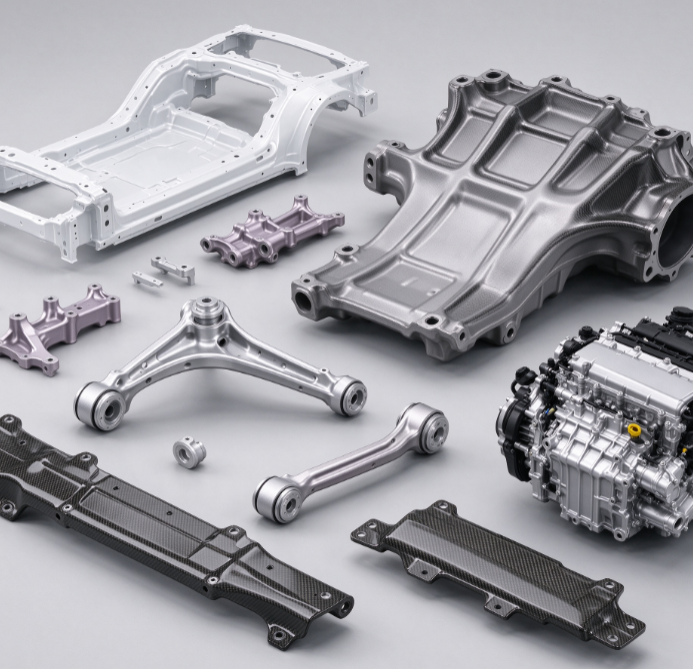
Table of Contents
1. Global Market Overview of Automotive Lightweight Parts
2. Primary Growth Drivers for Automotive Lightweight Part Adoption
3. Regional Deployment and Demand Distribution Worldwide
4. Most Popular Material Choices and Key Application Segments
5. Emerging Technology Trends Reshaping Automotive Lightweight Parts
6. Main Obstacles Faced by Global Component Suppliers
7. Frequently Asked Questions
1. Global Market Overview of Automotive Lightweight Parts
The worldwide automotive lightweight parts sector maintains strong expansion momentum in 2026. Aggregated global industry research indicates that the global automotive lightweight parts market reached USD 228.1 billion at the end of 2025, and revenue is projected to hit USD 391.0 billion by 2032, delivering a compound annual growth rate (CAGR) of 8.0 % for the 2025 2032 forecast window.
Automotive lightweight parts cover a wide portfolio of structural and functional components built to cut total vehicle weight, while keeping crash safety performance, mechanical strength and long term durability unchanged. These components are fitted across body in white assemblies, chassis frames, suspension modules, closure panels, powertrain housings and interior frameworks. Both internal combustion passenger vehicles, commercial trucks and fast growing electric car fleets are major end user categories.
Original equipment manufacturers are racing to remove extra vehicle mass. Industry engineering benchmarks confirm that every 100 kilogram reduction in vehicle weight can add between 6 8 kilometres of driving range for battery electric cars, making lightweight parts one of the most cost effective solutions to improve EV performance without upgrading expensive battery systems. In 2025, electric vehicle related lightweight component orders accounted for more than 38 % of the global total shipment volume.
2. Primary Growth Drivers for Automotive Lightweight Part Adoption
Three powerful global forces are accelerating investments into automotive lightweight parts across all continents.
First, tightening international carbon emission and fuel economy rules push automakers to launch aggressive weight reduction roadmaps. European Union CO₂ fleet average targets, United States CAFE fuel efficiency standards and newly enforced emission cut policies in India and Southeast Asia leave vehicle producers with very limited room to delay lightweight upgrades. Many large OEMs have publicly committed to cutting new car platform weight by 15 22 % before 2030.
Second, rapid EV expansion is the single largest catalyst for lightweight part demand. Heavy lithium ion battery packs add substantial mass to electric vehicles. Design teams must compensate by trimming weight from surrounding body and chassis components, so that vehicles can hit advertised driving range figures without over inflating battery costs. Lightweight parts therefore become a core element of electric vehicle cost control strategies.
Third, consumer expectations for better driving performance continue to rise. Lighter vehicles deliver snappier acceleration, shorter braking distances and improved handling characteristics. Sport utility vehicles and pickup truck manufacturers in North America have increasingly turned to aluminium lightweight parts to offset weight gains from larger cabin sizes and upgraded safety equipment.
3. Regional Deployment and Demand Distribution Worldwide
Asia Pacific remains the largest regional market for automotive lightweight parts, generating USD 105.2 billion revenue in 2025 and holding 46.1 % of global market share. Strong regional growth comes from huge EV manufacturing volumes, fast expanding domestic automotive supply chains in India, and continuous material science investment from Japanese and Korean automotive material suppliers. Local OEMs keep raising lightweight component content for each new generation electric platform.
Europe ranks as the second largest market. The region’s growth is policy driven, backed by European Green Deal sustainability targets and mature supply networks for advanced high strength steel, aluminium and composite lightweight parts. Many German, French and Italian automotive component factories are retooling their production lines to deliver multi material lightweight assemblies for electric vehicle projects. European buyers also place extra emphasis on recyclability when sourcing automotive lightweight parts.
North American lightweight parts demand expands steadily, with a focus on aluminium body panels, lightweight chassis castings and composite interior structures. Major local automakers are pouring capital into EV dedicated vehicle platforms, creating long term, high volume purchase contracts for lightweight component suppliers across Canada, the United States and Mexico.
Latin America, Middle East and Africa represent promising emerging markets. Growth here is slower at present, but rising passenger car sales and gradual EV adoption will open new procurement opportunities for cost competitive automotive lightweight parts over the next six year period.
4. Most Popular Material Choices and Key Application Segments
Metals still dominate the automotive lightweight parts industry in 2026. Advanced high strength steel (AHSS) holds the biggest single material share, widely used in safety critical body in white sections. Aluminium lightweight parts take second place, preferred for hoods, doors, fenders and battery tray housings, thanks to good strength to weight ratios and high recyclability rates.
Magnesium alloy lightweight parts are deployed on a smaller scale, mainly for steering wheel frames and transmission housings. Carbon fibre reinforced polymer composite lightweight parts grow at the fastest material segment CAGR. Composite components appear most often on premium class electric and performance vehicles, though high production costs still slow mass market roll out.
When broken down by application area, body in white lightweight parts capture approximately 41 % of total market revenue, followed by chassis and suspension components, closure panels, powertrain parts and lightweight interior assemblies.
5. Emerging Technology Trends Reshaping Automotive Lightweight Parts
Multi material mixed construction represents the most visible industry shift. Instead of building vehicle frames from one single material, engineering teams now combine high strength steel, aluminium, engineering plastics and local composite reinforcements in different zones, balancing weight saving, crash safety and manufacturing expenses. This mixed material architecture generates fresh technical requirements for advanced joining, bonding and sealing solutions for automotive lightweight parts.
Recyclable lightweight components gain far higher priority. Circular economy regulations across Europe force automotive suppliers to design lightweight parts with end of life disassembly and material recovery in mind. Closed loop aluminium production systems and thermoplastic composite lightweight parts are seeing fast rising order numbers.
Digital manufacturing workflows also transform lightweight part development cycles. Finite element simulation, generative design software and additive manufacturing prototyping help component developers optimise part geometry, cutting unnecessary material waste and shortening new product lead times. Several tier one suppliers launched new lightweight component product lines built with generative design technology during 2025 and early 2026.
6. Main Obstacles Faced by Global Component Suppliers
Despite strong long term prospects, the automotive lightweight parts industry still faces several well known pain points.
High raw material costs for carbon fibre composites and magnesium alloys keep final component prices above traditional steel made alternatives. This price gap slows penetration within low cost, high volume mass market vehicle programmes. Factories producing automotive lightweight parts also need expensive new stamping, casting and bonding equipment, requiring large upfront capital expenditure from suppliers.
Mixed material assembly brings technical challenges. Joining dissimilar metals can trigger corrosion risks at connection joints, demanding extra surface treatment work. After sales repair networks across many regions lack technicians trained to fix composite lightweight crash damaged components.
Raw material supply volatility remains another ongoing risk. Price swings for aluminium and specialty alloy feedstock can squeeze profit margins across the whole lightweight parts supply chain.
7. Frequently Asked Questions
Q1: What are automotive lightweight parts?
Automotive lightweight parts are vehicle components engineered from low density, high strength materials to lower overall vehicle weight, improving fuel economy, electric vehicle driving range and driving performance, while meeting global crash safety standards.
Q2: Which material is most widely used for automotive lightweight parts?
Advanced high strength steel and aluminium currently represent the two highest volume material categories for mass produced automotive lightweight parts worldwide. Carbon fibre composite lightweight parts are growing quickly but remain mostly limited to premium vehicle platforms.
Q3: How much range improvement can lightweight parts bring to an electric car?
A typical weight reduction of 100 kg can extend an electric vehicle driving range by around 6 8 kilometres, depending on driving conditions, vehicle size and battery capacity.
Q4: Are lightweight automotive components less safe in crashes?
No. Well engineered automotive lightweight parts are designed to pass all international crash safety tests. Engineers optimise component geometry and material grades to preserve or even upgrade impact energy absorbing performance.