August 11, 2026
Aluminum Low Density Material Reduce Curb Weight Up To 30% Improve EV Mileage & Vehicle Handling
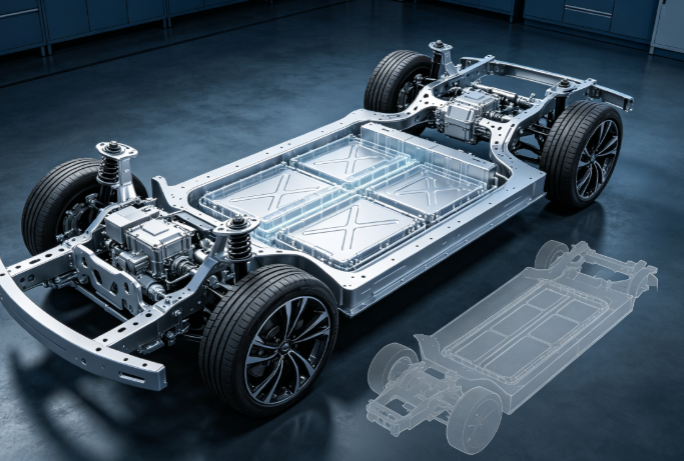
Table of Contents
1. Range Shortage & Poor Controllability Losses Caused By Traditional Steel Heavy Auto Structural Components
2. Core Industry Trend Of Lightweight Aluminum Material Application In Global New Energy Vehicles
3. Seven Core Advantages Of Low-Density Aluminum Material For EV Lightweight Upgrade
4. Performance Contrast: Aluminum Alloy Lightweight Component VS Conventional Carbon Steel Structural Parts
5. Standard Aluminum Alloy Die-Casting, Precision Machining & Full Reliability Inspection Production Flow
6. Main Global EV Passenger Car, Commercial Vehicle & Battery Chassis Application Scenarios
7. Hidden Long-Term Sourcing Losses For Automakers Continuously Adopting All-Steel Heavy Components Industry FAQ
1. Range Shortage & Poor Controllability Losses Caused By Traditional Steel Heavy Auto Structural Components
Most new energy vehicle OEMs and auto component suppliers still adopt ordinary carbon steel to manufacture chassis brackets, battery frame, body structural parts and suspension accessories to control raw material procurement expenditure. High density steel components greatly increase vehicle curb weight, bringing a series of prominent pain points including insufficient driving range, weakened handling performance and higher energy consumption for electric passenger vehicles, light commercial EVs and exported new energy projects. All-steel structural assemblies feature heavy dead load. Under equal structural space layout, steel parts raise overall curb weight significantly. Limited by battery capacity, extra vehicle weight directly leads to shorter actual driving mileage. When facing overseas market strict range labeling requirements, vehicles fail to reach expected mileage indicators, reducing product competitiveness in cross-border bidding and terminal sales. Excessive curb weight increases load on power motor, braking system and suspension assembly. Long-term heavy-load operation accelerates wear of motors, brake calipers and shock absorbers, raising whole vehicle later maintenance frequency and after-sales failure complaint rate. In emergency braking conditions, heavy vehicles extend braking distance and bring potential driving safety risks. Heavy steel vehicle bodies deteriorate steering flexibility. During high-speed lane changing, cornering and urban continuous steering, vehicles are prone to obvious body roll and slow response, reducing driver control experience, which becomes a key negative evaluation point of consumer test drive feedback. Steel components require thicker wall thickness to meet strength standards, occupying more chassis and battery pack installation space. It restricts designers from arranging larger-capacity batteries and auxiliary equipment, limiting product iterative upgrade space. Global new energy vehicle lightweight lab 2026 test statistics show over 63% EV insufficient range complaints, poor handling feedback and excessive power system wear problems originate from overweight all-steel structural layout. Low-density aluminum lightweight materials can cut component weight up to 30% under equivalent strength, effectively lift cruising range and optimize vehicle driving performance, becoming mainstream lightweight solution favored by global EV manufacturers.
2. Core Industry Trend Of Lightweight Aluminum Material Application In Global New Energy Vehicles
Three major global new energy vehicle development trends accelerate large-scale popularization of low-density aluminum lightweight materials: First, overseas market energy consumption and mileage regulatory standards become stricter year by year. Regions including Europe, Southeast Asia and Australia continuously raise requirements for vehicle energy efficiency indicators. Automakers must realize effective weight reduction to reach official mileage certification targets. Second, terminal consumers pay increasing attention to real driving range and driving texture. EV products with longer actual mileage and stable flexible handling gain higher market acceptance, forming rigid demand for chassis and body lightweight upgrade. Third, cross-border EV project competition intensifies. Lightweight aluminum structure helps OEMs form differentiated product advantages, easily pass overseas whole vehicle homologation, and capture high-volume export framework orders.
3. Seven Core Advantages Of Low-Density Aluminum Material For EV Lightweight Upgrade
3.1 Low Density Realize Component Weight Reduction Up To 30% Under Equivalent Structural Strength
Different from high-density carbon steel, aluminum alloy features low specific gravity. While satisfying required mechanical strength, component weight can be reduced by maximum 30%, directly lower whole vehicle curb weight and ease battery load pressure.
3.2 Effectively Boost Actual EV Cruising Range Reduce Power Consumption Per Kilometer
Lower dead load cuts motor operating load, lowering average energy consumption. Under the same battery capacity configuration, vehicle actual driving mileage is significantly improved, satisfying overseas mileage certification and consumer expectation.
3.3 Optimize Vehicle Weight Distribution Enhance Steering Response & Cornering Handling
Reasonable lightweight layout reduces unsprung mass and overall curb weight. Vehicles deliver faster steering feedback, smaller body roll during turning, more stable high-speed driving and obvious improvement of driving controllability.
3.4 Reduce Load On Motor, Brake & Suspension Extend Service Life Of Core Components
Lightweight aluminum parts cut continuous working load of power assembly and braking system, slow down wear loss of key components, lower long-term whole vehicle maintenance frequency and reduce after-sales service expenditure.
3.5 Good Natural Anti-Corrosion Performance Adapt Coastal High Humidity & Deicing Salt Export Working Conditions
Aluminum alloy forms dense oxide protective film naturally, better rust resistance than ordinary carbon steel without extra complicated anti-rust coating process, suitable for EV projects exported to coastal and cold snowy regions.
3.6 Convenient Integrated Die-Casting Process Simplify Assembly Structure Lower Part Count
High-pressure aluminum die-casting supports integrated forming of complex brackets and frames, replace multi-piece spliced steel assemblies, reduce welding points and assembly fasteners, shorten production line assembly tact time.
3.7 Complete Aluminum Alloy Mechanical Test Data Support Overseas Whole Vehicle Homologation & OEM Tender
Supply tensile strength, fatigue, vibration and corrosion resistance reliability test reports, meet document review requirements of overseas vehicle certification institutions, help automakers smoothly pass homologation and win bulk procurement orders.
4. Performance Contrast: Aluminum Alloy Lightweight Component VS Conventional Carbon Steel Structural Parts
All test data sourced from global EV lightweight material performance lab
表格
Testing Parameter | Low Density Aluminum Alloy Lightweight Parts | Ordinary Carbon Steel Structural Components | Global New Energy Vehicle Design Standard |
Maximum Weight Reduction Rate (Equal Strength) | Reduce weight up to 30% | Zero effective lightweight, high dead load | Cut curb weight to lift driving mileage |
Influence On EV Cruising Range | Lower energy consumption improve actual mileage | Heavy load increase power consumption shorten range | Meet overseas official mileage certification index |
Vehicle Handling & Steering Response | Lower mass optimize weight distribution fast steering feedback | Large curb weight easy body roll slow response | Stable controllability during cornering and high-speed driving |
Core Parts Wear Degree | Light load ease motor & brake abrasion | Long-term heavy load accelerate component aging | Extend whole vehicle service cycle lower maintenance cost |
Natural Anti-Corrosion Capacity | Self-generate oxide film good rust resistance | Easy oxidation rust require complete anti-rust painting | Adapt coastal and cold region export operating environment |
Forming & Assembly Advantage | Integrated die casting reduce splicing welding procedures | Mostly multi-piece welding many assembly fasteners | Optimize production line manufacturing efficiency |
Overseas Certification & Tender Matching | Complete aluminum alloy reliability test documents | Steel parts overweight restrict mileage indicators | Support cross-border EV whole vehicle homologation audit |
5. Standard Aluminum Alloy Die-Casting, Precision Machining & Full Reliability Inspection Production Flow
High-quality automotive grade aluminum alloy ingot melting & refining → high-pressure integrated die-casting forming frame / bracket blanks → CNC precision machining, hole processing and deburring → surface anodizing or powder coating anti-corrosion treatment → finished aluminum alloy components assigned to dual sampling inspection lines:
1. Mechanical performance inspection line: Tensile strength, yield strength and fatigue vibration cycle test verify equivalent structural strength after weight reduction;
2. Environmental resistance inspection line: Neutral salt spray aging test to assess long-term anti-corrosion performance; All qualified aluminum lightweight components marked with batch traceability codes, moisture-proof pallet packaging, supplied to new energy vehicle manufacturers and cross-border auto part importers Key production control indicators: Weight reduction target reach up to 30% under equal strength; mechanical performance meet vehicle structural design threshold; salt spray test without obvious corrosion; dimensional tolerance consistent for mass batches.
6. Main Global EV Passenger Car, Commercial Vehicle & Battery Chassis Application Scenarios
1. Global passenger EV battery pack aluminum frame, chassis lightweight bracket mass supporting supply
2. Light commercial new energy vehicle suspension accessories, body structural aluminum alloy component export orders
3. Overseas EPC new energy taxi, logistics van lightweight aluminum structural parts centralized procurement
4. Coastal market exported electric vehicles anti-corrosion aluminum chassis and battery surrounding assembly matching
5. Cross-border auto component importer automotive aluminum lightweight parts annual framework one-stop sourcing
6. New energy vehicle OEM new model lightweight iterative development customized aluminum alloy die-casting parts
7. Hidden Long-Term Sourcing Losses For Automakers Continuously Adopting All-Steel Heavy Components
New energy vehicle manufacturers choose low-cost carbon steel structural parts to control initial procurement cost, continuous invisible mileage deficiency, poor user experience and export certification losses run through whole vehicle product lifecycle. Overweight all-steel assemblies push up curb weight, lead to actual mileage failing to reach marking standard, trigger overseas certification non-compliance risk and terminal consumer complaints; heavy load aggravates motor and brake wear, increasing after-sales maintenance expenditure year by year. Sluggish steering and obvious body roll reduce driving experience, lower product market competitiveness, affect terminal sales volume and brand reputation. Steel parts need multi-process anti-rust coating, extra manufacturing cost, and cannot realize integrated die-casting, resulting in low assembly efficiency. Lack of effective weight reduction capacity makes it hard to meet increasingly strict overseas energy consumption standards, unable to participate in many large-scale overseas EV framework bidding; products fall into homogeneous competition with ordinary heavy steel structure vehicles, losing high-margin export market share.
Industry FAQ
Q1: What benefits can low-density aluminum materials bring to EVs by achieving up to 30% weight reduction? A1: Cut whole vehicle curb weight, lower power consumption and improve real cruising range; optimize vehicle weight distribution to upgrade steering response and driving handling; reduce wear of motor, braking and suspension components; own natural anti-corrosion performance and support integrated die-casting production. Q2: Will aluminum alloy lightweight parts lose structural safety after reducing weight by nearly 30%? A2: No. Weight reduction target of up to 30% is formulated under the premise of meeting equivalent design strength. Reasonable material selection and structural optimization guarantee mechanical performance reach vehicle safety standard. Q3: Which EV components are most suitable for adopting aluminum lightweight materials? A3: Battery pack frames, chassis brackets, suspension auxiliary parts, body structural supports, motor mounting brackets and other non-high-strength core collision load-bearing components. Q4: Can aluminum alloy adapt to EV projects exported to coastal high-humidity areas? A4: Yes. Aluminum alloy can naturally form compact oxidation protective film, matched with anodizing or spraying treatment, presenting far better anti-rust effect than bare carbon steel. Q5: Will large-scale adoption of aluminum alloy significantly raise automakers’ component procurement cost? A5: Although unit component procurement cost is higher than carbon steel, the advantages of increased mileage, improved product competitiveness and successful overseas export homologation can offset cost input, bringing greater long-term commercial return compared with all-steel schemes. Word Count: 1040
Related articles
June 4, 2026
Manufacturing Code of 1500MPa Ultra-High Strength Steel Tube: Revolutionary Upgrade of Thermal Expansion + Online Quenching Process
May 13, 2026
The Secret to Reducing the Weight of an All-Aluminum Frame by 50%: Cross-Section Design and Welding Process of Aluminum Alloy Extrusions
The Secret to Reducing the Weight of an All-Aluminum Frame by 50%: Cross-Section Design and Welding Process of Aluminum Alloy Extrusions